Cybersecurity is no longer a skill only meant for specialists working behind the scenes. It is essential to both the private and the public sectors as well as to the banking sector throughout the entire region (Middle East) to make sure that both the private sector and the government are protecting their infrastructure against the growing threat of cyberattacks. With that said, a high percentage of cybersecurity professionals have entered the cybersecurity workforce, creating a competitive job market for Cybersecurity professionals. Specifically, in Bahrain, cybersecurity professionals see Saudi Arabia as an active Job Market. They are currently taking CEH training in Saudi Arabia to open up their cybersecurity opportunities for the future.
This blog is for beginners, early career professionals, and IT professionals in Bahrain who are seeking to learn more about what CEH is, why it is important, and how it can assist them in advancing their Careers.
Why Cybersecurity Skills Are More Important Than Ever in Saudi Arabia and Bahrain
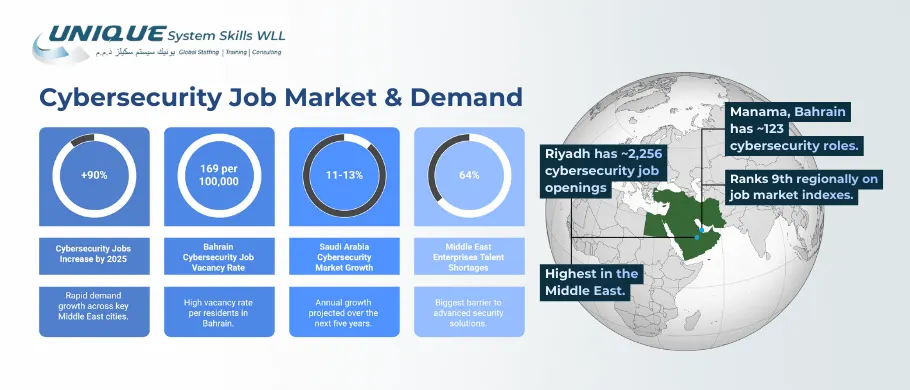
Banks, hospitals, energy companies, and government platforms are moving their operations online. While this brings efficiency, it also increases cyber risks. According to recent reports, the cyber infection rate in the Middle East is significantly higher than the global average; specifically, the financial and government sectors are among the most commonly attacked groups.
Bahrain, which boasts an outstanding banking and financial technology (fintech) ecosystem, is subjected to these risks on a regular basis. Simultaneously, Saudi Arabia’s numerous investments in the billions of dollars toward developing smart cities, cloud-based infrastructures, and artificial intelligence (AI)-driven services have created a need for skilled personnel in cybersecurity who will be able to protect systems from being compromised by cybercriminals prior to discovering vulnerabilities. The increase in sophistication of cyberattacks has evolved into a need for companies to employ individuals who have the capacity to think like cybercriminals but to act in an ethical manner.
This is where ethical hacking becomes important. Because of this, CEH training in Saudi Arabia has become a practical option for Bahraini professionals interested in broadening their potential career and job prospects throughout the region.
What Is CEH and Why Is It Trusted Worldwide?
The Certified Ethical Hacker (CEH) certification is designed to teach people how hackers actually break into systems, legally and ethically. Instead of only learning defense, CEH teaches how attacks happen from start to finish. This helps professionals understand how to stop them more effectively.
For learners in Bahrain, choosing CEH training in Saudi Arabia offers exposure to enterprise-level security practices used across the GCC. The certification is recognized by global organizations and government bodies, making it valuable not only in the Middle East but worldwide.
CEH does not expect you to be an expert at the beginning. It starts with basic concepts and slowly builds advanced skills. This makes it suitable for students, IT support staff, and professionals looking to switch careers.
What You Learn in an Ethical Hacking Course in KSA
A modern ethical hacking course in KSA follows the CEH v13 curriculum, which includes 20 detailed learning modules. These modules cover the full journey of a cyberattack, from gathering information to exploiting systems and reporting findings.
You learn topics such as:
- Footprinting and reconnaissance
- Network scanning and system hacking
- Malware threats and social engineering
- Web application and cloud security
- IoT and mobile platform attacks
This structured learning helps Bahrain-based learners understand real business environments, especially those that operate across borders. Many companies have systems hosted in Saudi Arabia while serving customers in Bahrain, so this regional relevance matters. This is another reason CEH training in Saudi Arabia is seen as highly practical.
How CEH v13 Uses AI to Improve Ethical Hacking Skills
One of the biggest updates in CEH v13 is the use of Artificial Intelligence (AI). Cybercriminals now use AI to automate attacks, scan systems faster, and find weak points more efficiently. CEH teaches professionals how to respond to this shift.
During CEH training in Saudi Arabia, learners understand how AI can help automate security testing and analyze threats. They also learn how AI systems themselves can be attacked if not properly secured.
The 4-Step Learning Model That Builds Real Skills
CEH follows a clear four-step learning process: Learn, Certify, Engage, and Compete. This approach helps learners move from theory to real-world application smoothly.
First, learners study core concepts through guided lessons and hands-on labs. Then, they prove their knowledge through certification exams. The next stage allows them to practice ethical hacking on simulated organizations. Finally, global competitions help keep skills updated.
For professionals in Bahrain, this structure ensures learning does not stop after completing CEH training in Saudi Arabia. Skills continue to improve through practice and challenge-based learning.
Career Options After Completing CEH
CEH opens the door to many cybersecurity roles. The certification aligns with more than 45 job roles, including:
- Penetration Tester
- Security Analyst
- SOC Analyst
- Cyber Defense Specialist
- Information Security Manager
For professionals in Bahrain, regional mobility adds more value. Many Saudi organizations hire consultants and specialists from neighboring countries. This makes CEH training in Saudi Arabia a strong career moves for those aiming to work on large-scale regional projects.
Salary Growth and Market Demand
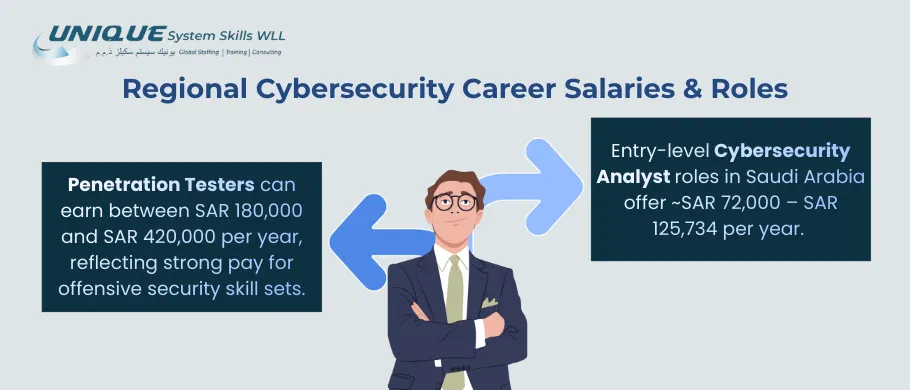
Cybersecurity professionals are among the highest-paid IT specialists globally. Ethical hackers earn strong salaries because skilled talent is limited. Reports show average global salaries above $110,000 per year, with higher earnings for experienced professionals.
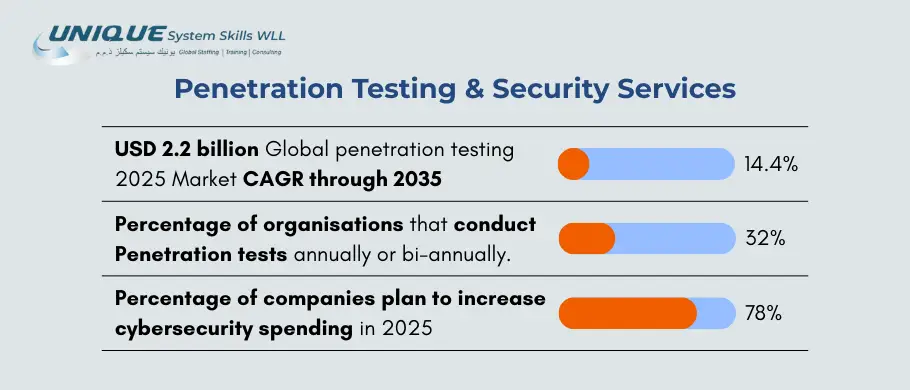
The ethical hacking services market is expected to grow rapidly over the next few years due to cloud adoption and stricter security regulations. This growth directly supports demand for penetration testing in Saudi Arabia and surrounding regions.
For Bahraini learners, CEH offers not only employment security but also long-term financial growth.
Choosing the Right Learning Format
CEH can be completed through classroom training, live online sessions, or self-paced learning. Each option suits different schedules and learning styles.
Before starting CEH, many learners benefit from understanding networking basics. A strong foundation makes advanced hacking concepts easier. Combining foundational knowledge with CEH training in Saudi Arabia creates a stronger learning path.
From Certification to Leadership Roles
The Certified Ethical Hacker (CEH) credential is a great starting point on a longer path to a cybersecurity career. Many people get advanced jobs such as cloud security expert, threat intelligence analyst, and security manager.
The experience gained through the CEH credential allows an individual to create security strategies rather than just do security-related tasks. For professionals working in Bahrain, obtaining CEH training in Saudi Arabia will enable them to gain regional context and experience.
Why Choose Unique System Skills for Your Learning Journey
When considering where to obtain CEH training in Saudi Arabia or any advanced IT certification, it is just as important to choose the right training organization as it is the actual training program. Unique System Skills (USS) is more than a typical training provider; it is a global IT staffing, training, and consulting firm with deep experience shaping careers and connecting learners with real job opportunities.
USS has been operating for many years with a strong leadership team that works across the United States, the GCC, and Asia. Its strength lies in understanding both industry needs and individual learner goals.
A key differentiating factor for USS is its focus on providing students with hands-on experience and a real-world understanding of the Cyber Security Career Field. This is accomplished through live instructor led training, real life case studies of actual cyber-attacks, as well as hands-on labs that give students a chance to apply the skills, and apply for jobs like penetration testing in Saudi Arabia.
In addition to providing education, the USS has developed a number of additional services to assist students and professionals with entering the cyber security industry, including Professional Mentorship, Professional Placement Assistance and Network Opportunities that will allow students and graduates to leverage their new skills into fulfilling Cyber Security careers.
Gaining Hands-On Experience in Penetration Testing
One of the most valuable parts of CEH is the practical training. Learners use real tools in safe environments to identify vulnerabilities, test defenses, and suggest fixes.
This practical exposure prepares learners for penetration testing in Saudi Arabia, where companies regularly hire ethical hackers to test their systems. These assessments are often required for compliance, cyber insurance, and regulatory audits.
Through repeated labs and simulations, learners gain confidence and problem-solving skills that employers look for in real security teams.
Final Thoughts: Is CEH the Right Choice for You?
Becoming an ethical hacker is about protecting systems, data, and people. If you are a student or professional in Bahrain who wants a structured and respected entry into cybersecurity, CEH offers a reliable path.
With consistent learning, hands-on practice, and regional awareness, you can build a meaningful and future-proof career. CEH training in Saudi Arabia provides a necessary connection between your current skill set and the future opportunities available within the rapidly expanding Cybersecurity workforce in the Middle East.